
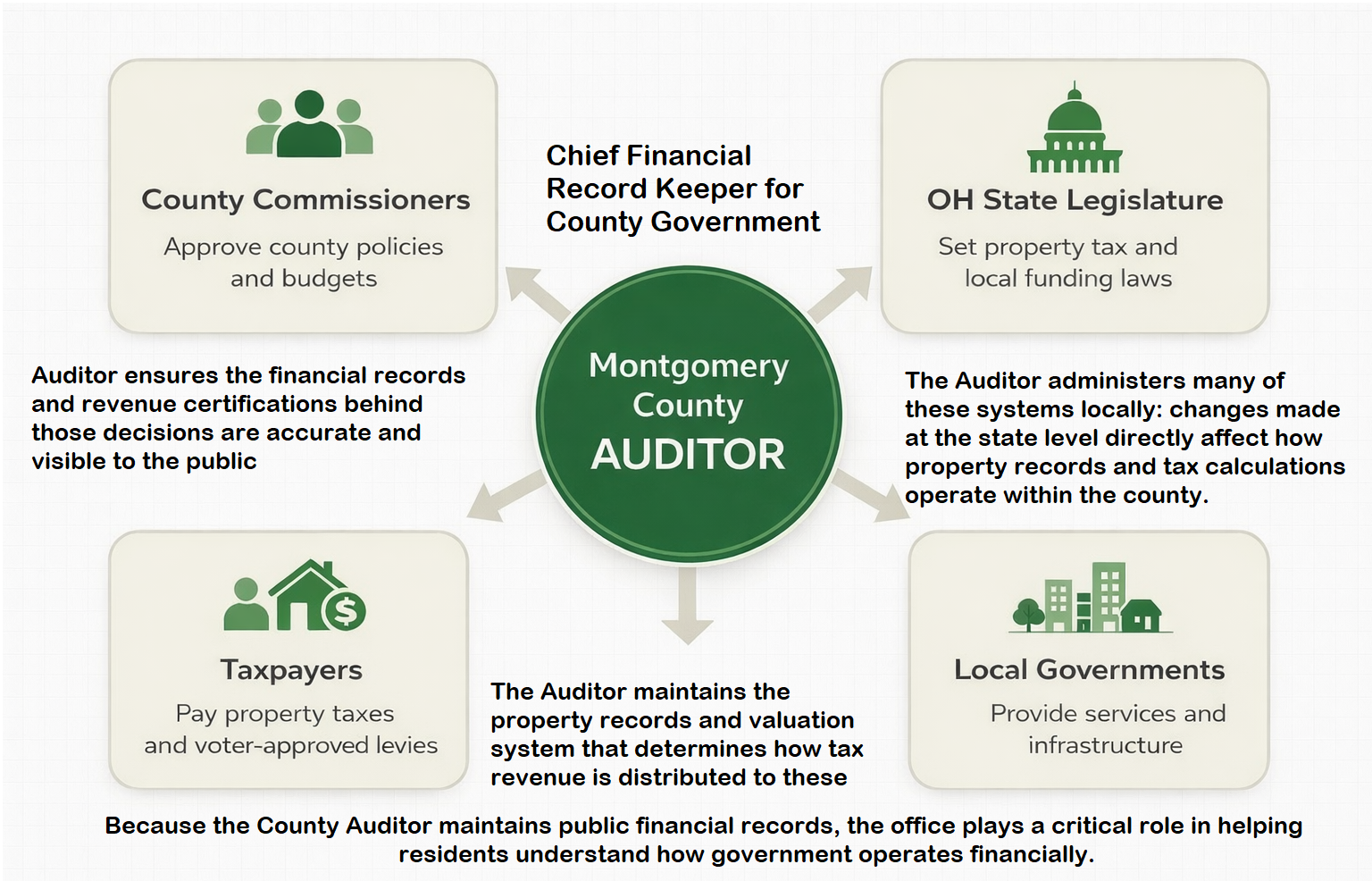
Many people hear the title County Auditor and assume the role only involves property taxes. In reality, the Auditor’s office connects to many parts of local government. It serves as a financial record keeper and a source of transparency for the public.
Understanding how the Auditor works with other offices helps residents see why this role is so important to the stability of local government.
The Auditor’s Role in County Government
The County Auditor maintains many of the financial and property records used throughout local government.
Key responsibilities include:
• Maintaining property ownership and valuation records
• Calculating property taxes based on approved levies
• Certifying available funds before public money is spent
• Maintaining financial records for county departments
• Providing public access to financial information
Because of these responsibilities, the Auditor’s office connects to several other government roles.
Working With County Commissioners
County Commissioners oversee many county operations and approve budgets for public services.
The Auditor’s office supports this work by:
• Certifying revenue available for county spending
• Maintaining financial records related to county departments
• Providing transparency so residents can review public finances
While Commissioners set policy and approve budgets, the Auditor ensures the financial records behind those decisions remain accurate and visible.
Working With the Ohio State Legislature
Members of the Ohio House and Senate create laws that affect how property taxes and local government funding operate.
For example, state lawmakers decide:
• Property tax exemptions
• Homestead benefits for homeowners
• Assessment rules for property values
• Funding formulas for schools and local governments
The County Auditor then applies those laws at the local level by maintaining records and calculating property taxes according to state guidelines.
Working With Cities, Villages, and Townships
Local governments rely heavily on property tax revenue to provide services for their communities.
These services often include:
• Police and fire protection
• Road maintenance
• Parks and recreation
• Infrastructure improvements
The Auditor’s office maintains the property valuation records used to distribute tax revenue to these local governments.
When property values change or development occurs, those updates help determine how revenue flows to local communities.
Working With Taxpayers
The most important connection the Auditor’s office has is with the residents of the county.
Property owners rely on the office for:
• Accurate property records
• Clear explanations of property valuations
• Public access to financial information
Transparency helps residents understand how government operates and how public dollars move through the system.