
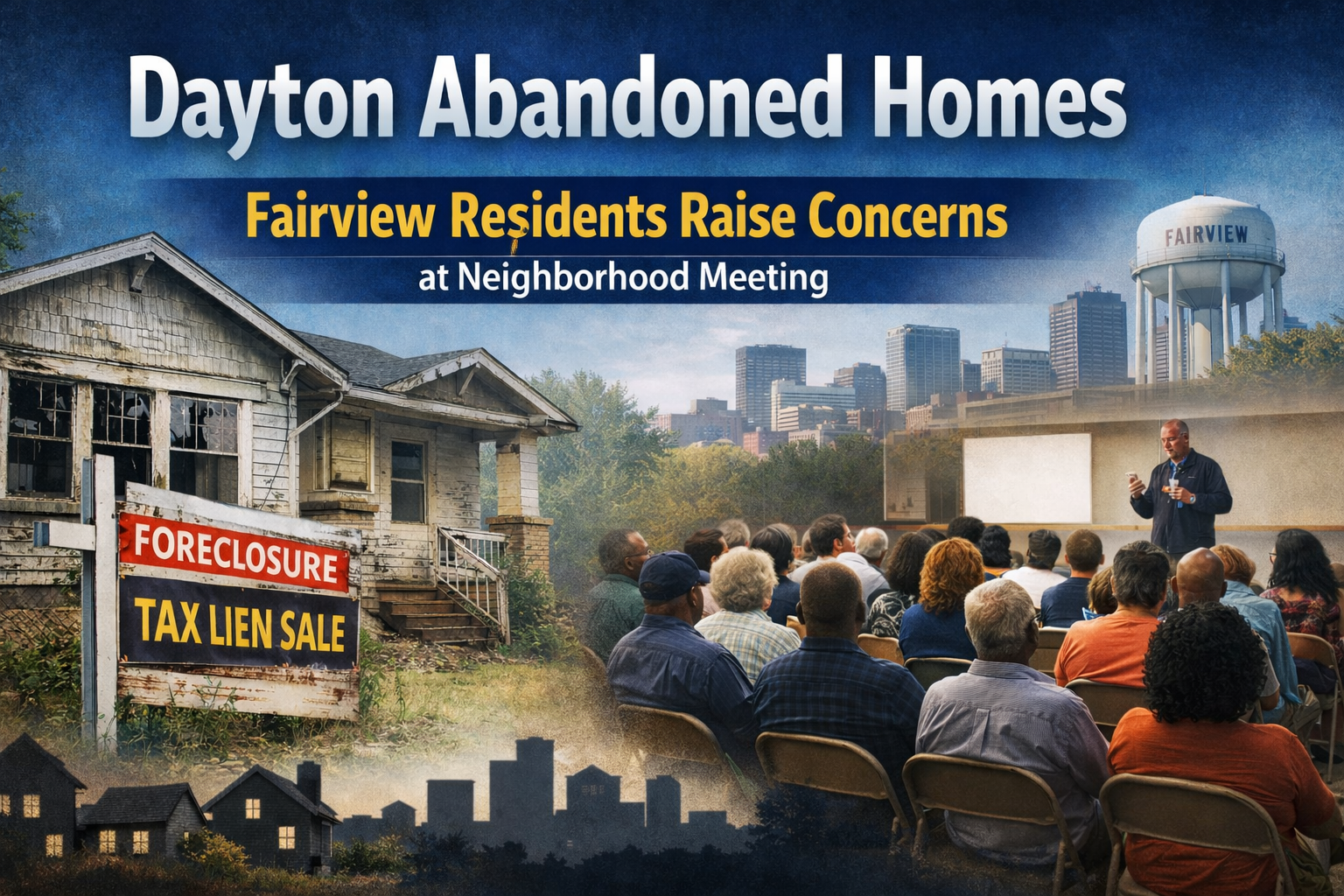
Fairview Neighborhood Meeting March 12, 2026
Recently I had the opportunity to meet with the Fairview Neighborhood Association after they invited me to attend a community meeting. The invitation followed a Facebook post I shared highlighting several blighted properties and discussing the need for a more consistent approach to addressing Dayton abandoned homes. {prior post}
I am grateful for the opportunity to listen directly to residents who live in these neighborhoods every day. Their concerns were honest, thoughtful, and unfortunately very familiar.
What struck me most was this: many of the issues residents described are the same problems I worked with investors and property owners on in that neighborhood as far back as 2010.
More than a decade later, those problems still exist.
That reality deserves attention.
The Ongoing Challenge of Dayton Abandoned Homes
Long-time residents shared their frustration with living next to homes that are:
- abandoned for extended periods of time
- poorly maintained or structurally deteriorating
- repeatedly placed on nuisance lists
- left unresolved for years
When properties remain in this condition for long periods, the impact extends far beyond the structure itself.
Neighbors often experience:
- declining property conditions
- increased vandalism and trespassing
- safety concerns, including potential fire hazards
- frustration with a system that appears unable to resolve the problem
As a result, residents repeatedly asked a simple question:
Why do these situations remain unresolved for so long?
Property Tax Delinquency and Third-Party Tax Liens
In many cases, abandoned homes also accumulate delinquent property taxes.
Montgomery County currently allows third-party tax lien purchasers to buy delinquent tax liens from the county. When that occurs, the purchaser pays the outstanding taxes to the county and assumes the lien on the property.
While this process provides the county with immediate revenue, it also means the property owner may then owe:
- the original tax debt
- additional penalties
- interest rates that can reach 18–25 percent
However, residents raised an important concern.
If the county can move quickly to collect delinquent taxes through these mechanisms, why do problem properties sometimes remain abandoned and unresolved for years?
A more balanced approach could include:
- earlier intervention when taxes first become delinquent
- proactive outreach to property owners
- structured repayment plans to help owners regain compliance
- stronger coordination between tax enforcement and nuisance property enforcement
When properties remain inactive for years, neighborhoods ultimately pay the price.
Unequal Outcomes Across Neighborhoods
Another theme that surfaced repeatedly was the perception that similar issues are handled differently depending on the neighborhood.
Residents expressed concern that abandoned properties in certain communities move through enforcement processes much more slowly than in others.
Whether the perception is accurate or not, the lack of transparency creates distrust.
Residents deserve a system that is:
- consistent
- transparent
- fair across all neighborhoods
Accountability should not depend on location.
Owner-Occupied Property Tax Credit Concerns
One of the most significant concerns raised during the meeting involved the Owner-Occupied Property Tax Credit.
This credit is intended to reduce the property tax burden for homeowners who live in their home as their primary residence.
However, residents shared examples suggesting that some property owners who do not live in the neighborhood may still be receiving this credit.
In some cases, residents believe individuals may even be claiming the credit on multiple properties.
If that is happening, it creates two serious problems:
- homeowners who legitimately qualify may not receive the benefit they deserve
- the tax burden shifts unfairly onto other property owners
Ensuring the integrity of the owner-occupied credit system should therefore be a priority.
Possible improvements could include:
- stronger verification processes
- regular audits of owner-occupied claims
- cross-checking ownership records with mailing addresses and rental registrations
- clearer reporting mechanisms for suspected misuse
Tax fairness depends on accurate records.
City and County Coordination on Blighted Properties
Residents also raised concerns about properties that remain abandoned despite appearing on nuisance lists.
In many cases, cities have the authority to:
- enforce maintenance standards
- require repairs
- initiate demolition when structures become unsafe
When these steps are delayed or avoided, neighbors continue to live with the consequences.
Stronger collaboration between municipal enforcement and county property records can help identify problem properties earlier and ensure that enforcement processes move forward when necessary.
Addressing Dayton abandoned homes requires coordination across multiple levels of government.
Rebuilding Trust Through Follow-Through
Perhaps the most powerful moment of the meeting came when a resident said:
“Everyone who runs for office comes here and makes promises. Then we never see them again.”
That skepticism is understandable.
Residents deserve more than promises.
They deserve officials who:
- listen
- return for follow-up conversations
- provide updates on progress
- and work toward real solutions
My goal is simple.
I want to earn the opportunity to come back and continue these conversations.
Neighborhood associations like Fairview are not just raising complaints. Instead, they are raising legitimate policy questions that deserve thoughtful attention.
And the best solutions will come from working with the people who live in these communities every day.
Moving Forward
The issues raised during the Fairview Neighborhood Association meeting highlight several areas where improvements are possible:
- stronger coordination on nuisance properties
- earlier intervention on delinquent taxes
- fair and transparent enforcement across neighborhoods
- protection of legitimate owner-occupied tax credits
- continued communication with residents
These conversations are important. And they should continue.
Listening to residents is the first step. Following through is the next.
Protecting Homeowners While Protecting Neighborhoods
I want to be very clear about something.
I am not in favor of people losing their homes because they fall behind on property taxes.
I am not in favor of people losing their homes, especially through a process that becomes unfair or overly punitive when property repairs fall behind.
Life happens. People face medical emergencies, job loss, family hardship, and other challenges that can make it difficult to keep up with bills. In those moments, local government should be looking for ways to help residents recover and remain in their homes, not accelerate a process that pushes them out.
Unfortunately, the current system often moves in the opposite direction.
Montgomery County has the ability to provide a better path.
Rather than sending tax liens to third-party companies that charge extremely high interest rates, the county could implement solutions that:
- allow reasonable repayment plans for residents
- keep penalties fair and manageable
- ensure additional fees remain within our county rather than going to out-of-state companies
And if a property ultimately must move toward foreclosure, the process should follow the same legal standards and due process that banks must follow when foreclosing on a mortgage.
Government should not operate under a different standard.
The goal should always be to help residents stay in their homes whenever possible, while also ensuring that abandoned and neglected properties do not continue harming neighborhoods.
Fairness, accountability, and consistency must guide the process.