
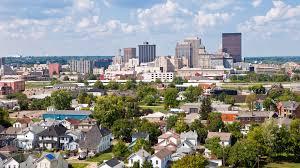
Local Issues, Growth & What It Means for Taxpayers
Dayton, Ohio is the largest city in Montgomery County, Ohio and serves as the center of the Dayton metropolitan region. Because of its size and regional role, the city hosts many government services, major employers, and public institutions. As a result, decisions made in Dayton often influence surrounding communities.
Historically, Dayton grew as a center of manufacturing, transportation, and innovation. Most notably, Wilbur Wright and Orville Wright began their early aviation work in the city. Consequently, Dayton became widely known as the birthplace of aviation.
Over time, however, the local economy has evolved. Today, healthcare, education, logistics, and advanced manufacturing play larger roles in the region. In addition, research institutions and defense-related industries contribute to the area’s economic activity.
The city operates under Ohio’s municipal form of government. Local officials manage public safety, infrastructure maintenance, zoning decisions, and long-term financial planning. Therefore, city leadership must balance service demands with complex budgeting decisions.
Dayton borders many communities across Montgomery County. For example, nearby jurisdictions include Kettering, Ohio, Riverside, Ohio, Trotwood, Ohio, and Huber Heights, Ohio. Because of this location, Dayton sits at the center of the region’s transportation networks and employment centers.
This Community Spotlight highlights Dayton’s defining characteristics, financial considerations, and governance issues. In addition, it outlines topics residents and taxpayers may want to watch in the coming years.
Unique attributes
- Region’s urban core: largest service footprint (public safety, housing stabilization, roads/bridges, legacy infrastructure).
- Higher concentration of older housing stock and legacy industrial parcels → more redevelopment opportunity and more deferred-cost risk.
Challenges
- Aging infrastructure + older neighborhoods = higher per-capita maintenance (streets, sewers, bridges, demolition/land bank pressures).
- Housing stability/quality and neighborhood reinvestment needs (often intertwined with appraisal/assessment perceptions and tax burden).
Financial situation (signals to note)
- Publishes full financial statements and annual comprehensive reporting (easy public access).
- Most recent city ACFRs are also filed through the Ohio Auditor of State audit search system.
Prevailing issues to track
- Capital plan pacing (street program, water/wastewater, facilities).
- Public safety staffing/cost containment and overtime controls.
- Neighborhood reinvestment and brownfield/reuse strategy.