
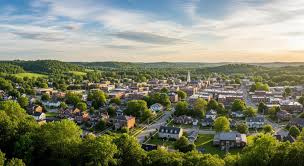
Local Issues, Growth & What It Means for Taxpayers
Centerville Ohio stands as one of Montgomery County’s most established residential communities, known for strong neighborhood stability, community amenities, and thoughtful planning standards. Because Centerville maintains high service expectations, long-term capital scheduling and fiscal discipline remain central to sustainable governance.
With stable residential areas and clearly defined commercial corridors, the city supports income-tax and service funding through balanced economic activity. As infrastructure ages and redevelopment opportunities emerge, leadership must align reinvestment with neighborhood character and fiscal capacity.
Unique attributes
Centerville carries several defining strengths within the county.
- Predominantly residential character
- High service expectations among residents
- Well-maintained parks and community amenities
- Defined commercial corridors supporting municipal revenue
Because the city emphasizes planning standards and neighborhood stability, development decisions often receive careful review. In addition, stable commercial corridors contribute to income-tax revenue that supports service delivery.
This balance between residential quality and economic activity shapes long-term governance priorities.
Challenges
However, mature suburbs face predictable infrastructure pressures.
- Maintaining roads, parks, and facilities at premium standards
- Managing aging infrastructure replacement cycles
- Balancing infill and redevelopment with traffic concerns
- Protecting neighborhood character during commercial updates
As infrastructure systems age, capital projects must occur steadily rather than reactively. Consequently, leadership often prioritizes pavement condition ratings and facility lifecycle planning.
Moreover, redevelopment within established corridors can increase traffic or alter stormwater flow patterns. Therefore, officials must evaluate projects carefully to maintain level-of-service expectations.
When residents value consistency and quality, even incremental changes require clear communication and transparent planning.
Financial situation
Centerville Ohio produces a comprehensive Annual Comprehensive Financial Report (ACFR) and maintains a publicly accessible archive of current and prior-year reports.
Residents can review ACFR documentation to examine:
- Revenue composition and trends
- Capital improvement funding
- Infrastructure replacement schedules
- Debt positioning and reserves
- Long-term fiscal projections
Because Centerville relies in part on income-tax revenue tied to commercial corridors, economic stability directly influences budget resilience. Therefore, long-term planning must account for both residential expectations and commercial performance.
Transparent reporting practices allow residents to assess how capital investments align with fiscal sustainability. When leaders provide consistent financial documentation, they reinforce public confidence.
Click HERE for Centerville Official website.
Prevailing issues to track
Looking ahead, long-term capital planning remains central to governance.
- Road and pavement replacement schedules
- Facility modernization timing
- Corridor redevelopment decisions
- Traffic and level-of-service impacts
Because Centerville maintains high infrastructure standards, sequencing projects strategically prevents service disruption and cost spikes.
Additionally, corridor redevelopment decisions may prompt discussion about traffic flow and neighborhood impact. Therefore, proactive communication and engineering analysis support balanced decision-making.
Final Thoughts
Centerville illustrates how mature suburban communities sustain high service expectations through disciplined planning and transparent financial reporting. While growth pressures may differ from rapidly expanding areas, infrastructure replacement cycles still demand careful coordination.
Ultimately, long-term fiscal sustainability depends on aligning capital schedules with revenue trends and maintaining neighborhood character. When Centerville balances reinvestment with responsible budgeting, it reinforces both stability and community trust.