
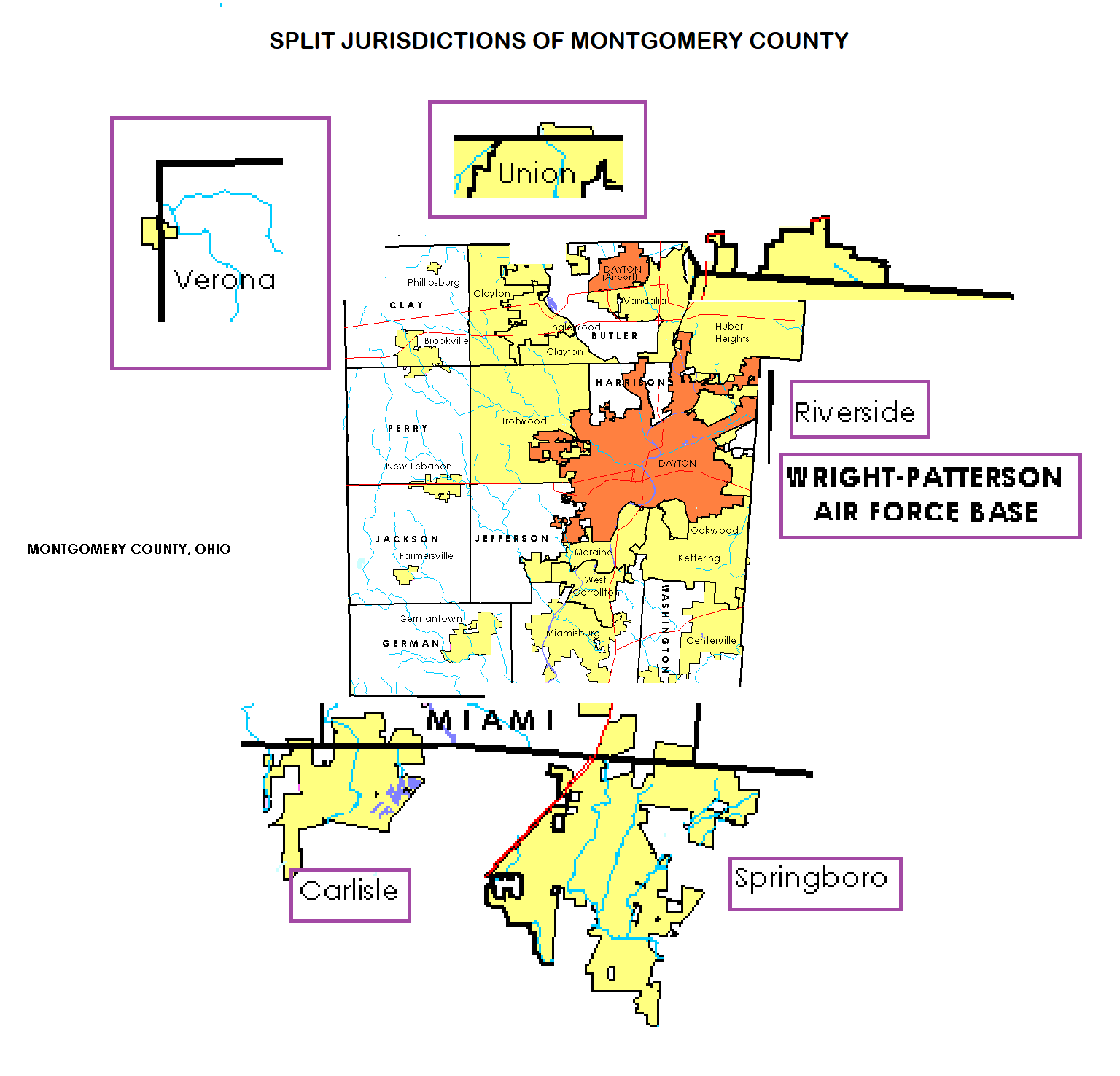
A split jurisdiction occurs when a single community—such as a city or village—spans more than one county. While residents may share the same local government, school district, and community identity, different county governments handle key administrative functions depending on where a property is physically located.
Because counties manage many important services, this arrangement can create differences for residents who live in the same city but fall under different county systems.
How Split Jurisdictions Work
To understand what is a split jurisdiction, it helps to look at how local government boundaries are organized.
Cities and villages often expand over time through annexation or development. However, county boundaries typically remain fixed. As a result, a city may eventually extend across a county line.
When that happens, the city government remains unified, but county-level services are still provided by the county in which each property sits.
Therefore, two homes in the same city may rely on completely different county offices.
What Residents May Experience in a Split Jurisdiction
In a split jurisdiction, neighbors who live only a short distance apart may interact with different county systems.
For example, residents on the same street may:
- Receive property tax bills from different county auditors
- Fall under different municipal or county court systems
- File documents with different recorder or clerk offices
- Access services through different county agencies
Although the city government remains the same, the county responsibilities do not change.
Because of this structure, residents sometimes notice differences in administrative processes even though they live in the same community.
Why Split Jurisdictions Create Complexity
A split jurisdiction is not necessarily a problem. However, it does introduce additional layers of coordination.
For instance, local governments must often work with multiple county agencies when they manage infrastructure projects, development approvals, or public services.
As a result, officials may need to coordinate across:
- Multiple county auditors
- Different court systems
- Separate county engineering departments
- Different property record systems
Without careful coordination, residents may experience confusion when navigating government offices.
Therefore, strong communication between city and county officials becomes essential.
Why Split Jurisdictions Exist
Split jurisdictions usually develop gradually over time.
For example, cities may annex land that extends across a county boundary. Similarly, growing suburbs sometimes expand into neighboring counties as development spreads outward.
Because county lines rarely change, the city eventually operates inside multiple counties.
Consequently, the city government becomes unified while county administration remains divided.
A Real-World Example: Union
Union provides a useful example when discussing what is a split jurisdiction.
The City of Union spans both Montgomery County, Ohio and Miami County, Ohio. As a result, residents who live in the same city may interact with different county systems depending on where their homes sit.
For instance, two neighbors may:
- Pay property taxes through different county auditor offices
- Use different court systems
- Work with different county agencies for records or filings
Even though these residents share the same city government and community identity, their county-level administrative processes differ.
Because of this structure, Union often appears in discussions about regional governance and coordination.
Why Split Jurisdictions Matter in Local Policy Discussions
As Montgomery County communities increasingly discuss mergers, annexations, and shared services, understanding what is a split jurisdiction becomes more important.
When policymakers evaluate regional cooperation or boundary changes, they must consider how overlapping county systems affect residents.
In some cases, split jurisdictions function smoothly. In others, they require additional coordination to ensure consistent services.
Ultimately, understanding these structures helps residents and officials make more informed decisions about local governance.