
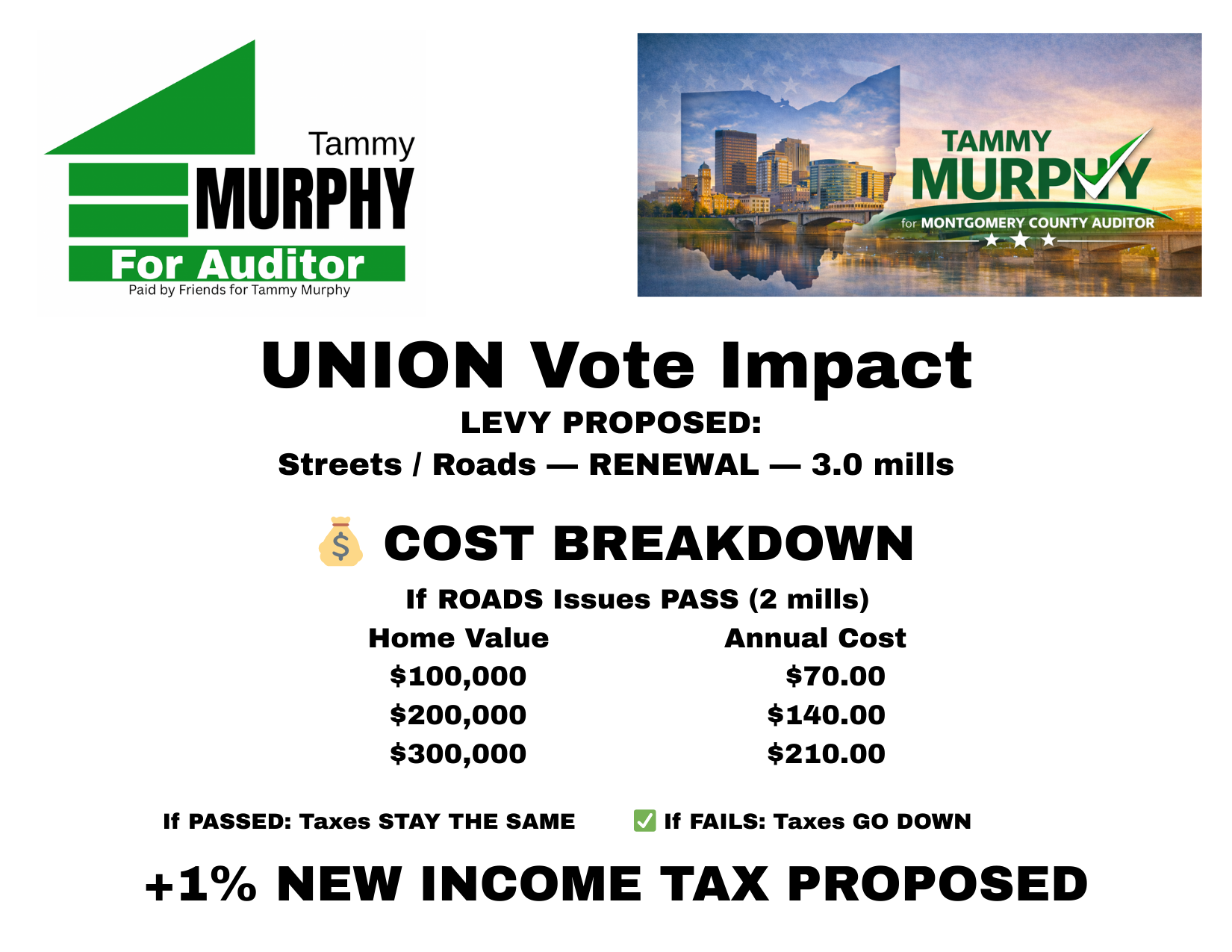
Union voters will see two important issues on the May 2026 ballot. The ballot includes a renewal levy for streets, roads, and bridges and a proposed 1% municipal income tax for police and fire operations.
The road levy supports infrastructure residents already rely on. The income tax proposal would create a new funding source tied to earned income rather than property value.
Road Levy Renewal for Streets, Roads, and Bridges
The proposed 3.0 mill levy renewal supports maintenance and repair of Union’s transportation infrastructure.
If the levy passes, property taxes for this issue would remain the same since it is a renewal rather than a new tax.
If the levy fails, the levy would expire and property taxes tied to it would decrease.
Estimated Annual Cost if Roads Issues Pass (2 mills portion)
| Home Value | Annual Cost |
|---|---|
| $100,000 | $70 |
| $200,000 | $140 |
| $300,000 | $210 |
These funds help maintain streets, roads, and bridges used by residents daily.
Proposed 1% Municipal Income Tax
The ballot also includes a proposal to establish a new 1% municipal income tax.
Unlike property taxes, this tax would apply to earned income rather than home value.
If approved, the revenue would be used to support:
- Police operations
- Fire and emergency services
- Public safety resources
This measure would create a new funding stream specifically for public safety services.
YOUR VOICE / YOUR VOTE MATTERS – May 5, 2026
What to Know Before You Vote
Before casting your ballot, it’s important to understand whether an issue represents new funding or a renewal of an existing tax, and how that decision affects your household. Renewals typically continue current services at existing tax levels, while new levies or taxes create additional financial impact. Reviewing the purpose of each issue and how it applies to your community can help you make an informed decision that aligns with your priorities.