
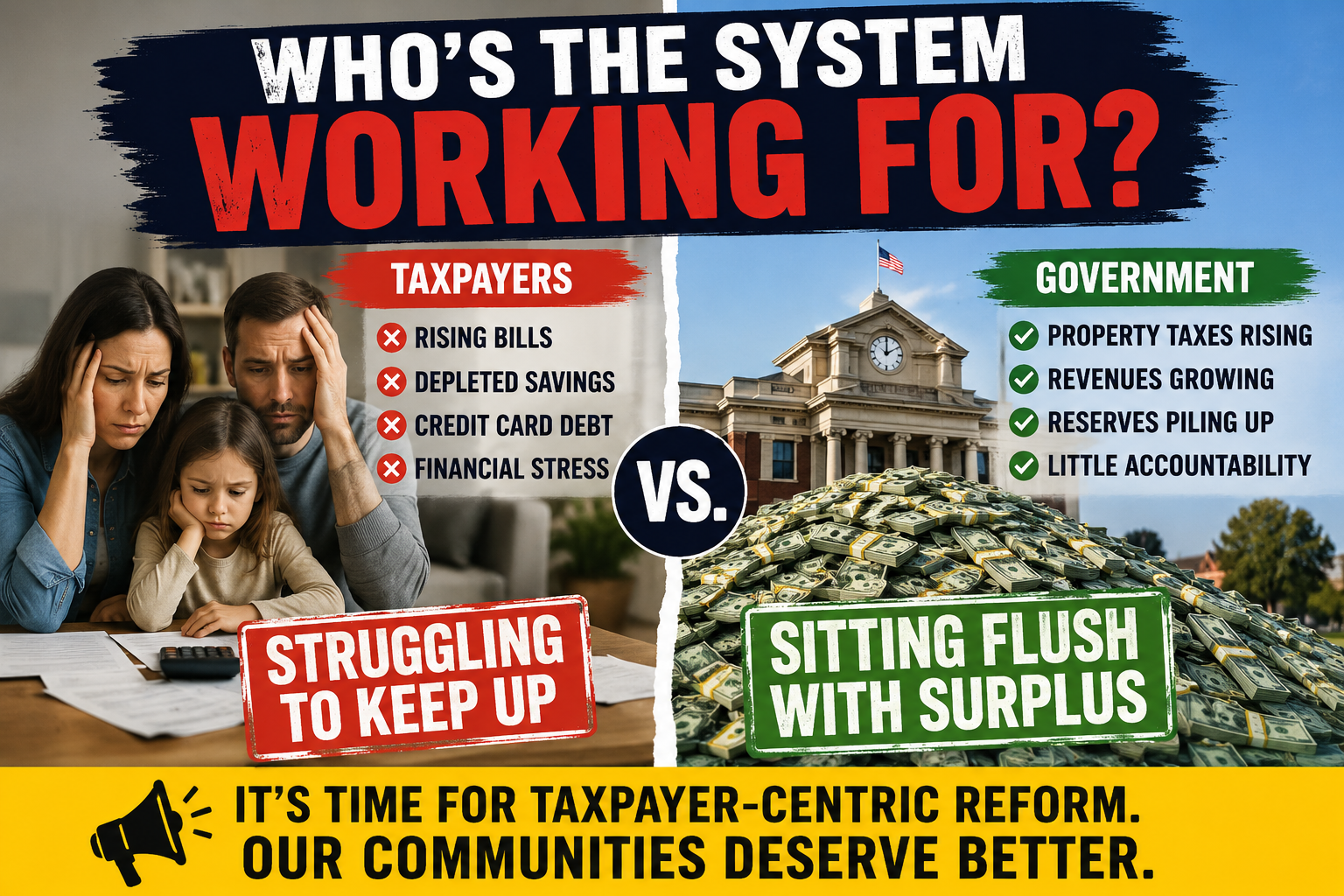
Why Ohio’s Property Tax Debate Is Escalating
For years, Ohio homeowners have been told that rising property taxes are simply “part of the system.” But across Montgomery County and throughout Ohio, more residents are beginning to ask a difficult question:
If families are struggling more than ever… why are so many public entities reporting growing reserves and carryover balances?
This is exactly why the conversation surrounding Ohio property tax reform has intensified.
Many residents are not arguing against schools, fire departments, parks, libraries, or local services. In fact, most people value and support the essential services that make our communities strong.
What they are questioning is whether the current system still reflects the financial realities facing homeowners today.
Families Are Feeling the Pressure
Over the last several years:
- grocery costs increased,
- insurance premiums climbed,
- utility bills rose,
- healthcare expenses surged,
- and interest rates made borrowing more expensive.
At the same time, many homeowners experienced significant increases in property valuations — which often translated into higher property tax bills.
For some households, the increases were manageable.
For others, especially:
- seniors on fixed incomes,
- young families,
- first-time homeowners,
- and working-class residents,
the pressure became overwhelming.
Many families have already depleted savings accounts that once acted as a safety net. Others increasingly rely on credit cards to absorb unexpected expenses, emergency repairs, or rising monthly costs.
Yet while many households tightened spending, public entities across Ohio frequently reported:
- stronger reserve balances,
- larger carryovers,
- and continued revenue growth tied to rising property values.
That contrast is fueling frustration.
Understanding the Reserve Debate
One of the most misunderstood parts of the Ohio property tax system involves “carryover” or reserve balances.
These balances are not always simple “extra money.” Some funds are legally restricted for:
- buildings,
- debt payments,
- capital improvements,
- or future obligations.
However, many districts and jurisdictions throughout Ohio have still accumulated historically strong financial positions over the last several years.
Recent reporting showed Montgomery County school districts averaging reserve balances near half of annual operating expenditures. Some districts statewide reported even larger percentages.
To taxpayers struggling to afford groceries, utilities, and mortgage payments, it creates an understandable question:
If government revenues continue growing while families fall behind… where is the relief for homeowners?
Why “Abolish Property Taxes” Is Gaining Attention
The phrase “Abolish Property Taxes” immediately sparks strong reactions.
Critics often respond with extreme warnings:
- “Schools will collapse.”
- “Cities will fail.”
- “Taxes elsewhere will skyrocket.”
- “Essential services will disappear.”
But many residents are not necessarily demanding reckless elimination of services.
Instead, they are expressing frustration that meaningful taxpayer-focused reform has failed to happen for decades.
The current system often feels disconnected from the realities homeowners face:
- property values rise,
- tax bills increase,
- government revenues grow,
- but household incomes do not rise at the same pace.
Meanwhile, state leaders continue debating the issue without producing reforms that many taxpayers feel in their daily lives.
That frustration creates fertile ground for larger and more aggressive reform movements.
The Real Conversation Ohio Needs
The debate should not be reduced to:
“Do you support schools or taxpayers?”
That is a false choice.
Ohio can support:
- quality schools,
- safe communities,
- emergency services,
- and responsible government
while also demanding:
- transparency,
- accountability,
- reserve disclosure,
- efficiency,
- and meaningful taxpayer protections.
Residents deserve easy-to-understand reporting that clearly shows:
- how much property tax revenue is collected,
- where the money goes,
- what reserves exist,
- and when surplus growth exceeds operational need.
Most importantly, taxpayers deserve leaders willing to recognize that homeowners themselves are now facing financial instability.
A Sustainable Future Requires Balance
The answer is not fear-based politics from either side.
It is not productive to pretend:
- every reserve balance is abuse,
- or that every taxpayer concern is unreasonable.
Likewise, it is unfair to dismiss struggling homeowners with scare tactics suggesting any reform automatically means community collapse.
Ohio needs balanced, taxpayer-centric reform discussions grounded in:
- transparency,
- long-term sustainability,
- operational efficiency,
- and compassion for the residents funding the system.
Because ultimately, homeowners are not just revenue sources.
They are the people trying to keep their homes, raise families, retire with dignity, and remain part of the communities they helped build.
And that perspective deserves a seat at the table in every property tax conversation moving forward.