
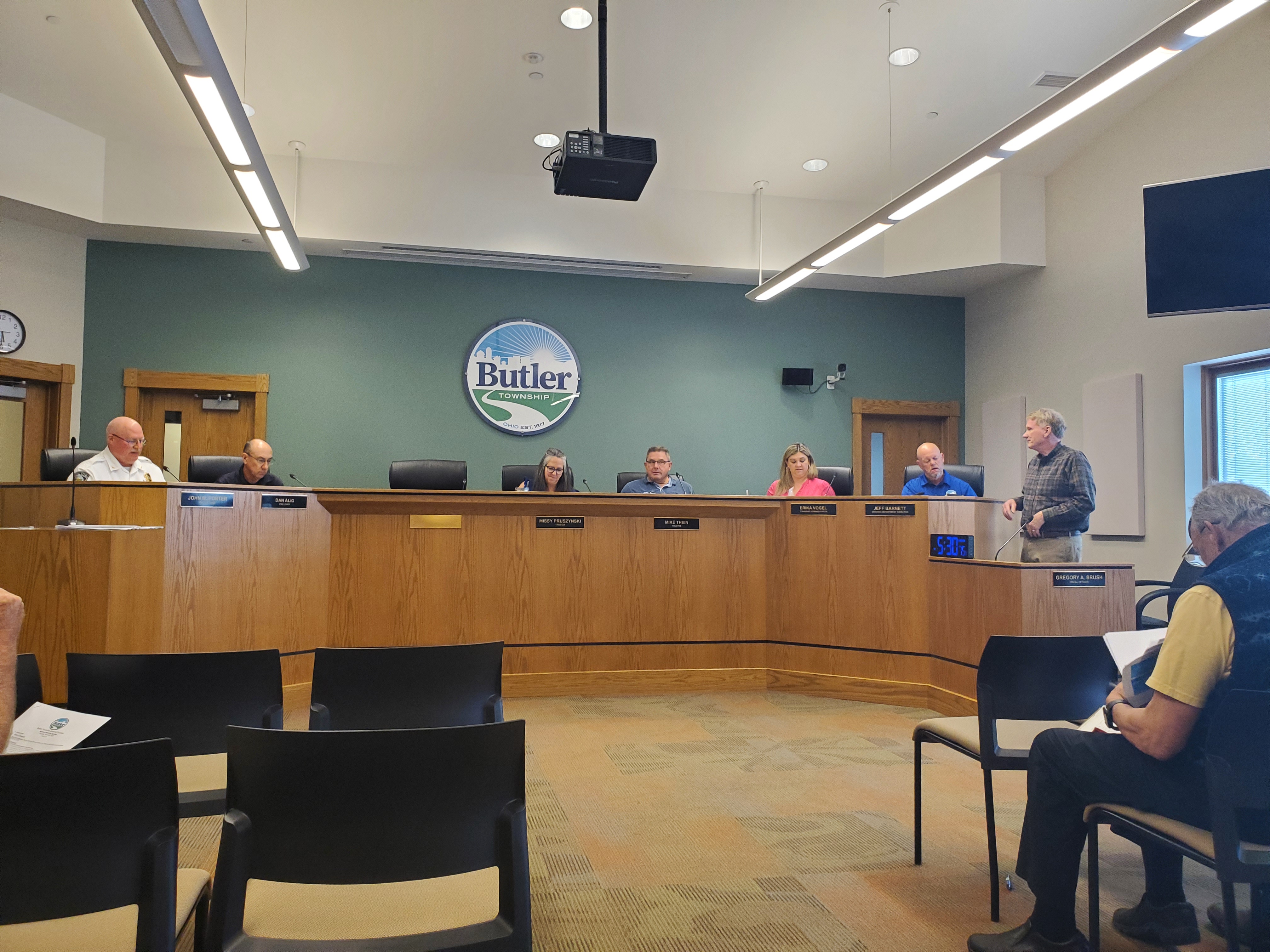
Limited Representation and Need for Transparency
The Butler Township Trustee meeting recap from April 28, 2026, highlighted several key themes. Most notably, the meeting raised questions about representation, the pace of decisions, and the need for clearer information for residents.
Limited Representation During Decision-Making
Due to an excused absence, only two trustees were present to conduct Township business.
As a result, every action followed the same pattern:
- One trustee made the motion
- The other seconded
- Both voted in approval
While this process meets procedural requirements, it creates a different dynamic.
With only two votes, there is no opportunity for a split decision or a differing viewpoint to be formally expressed.
Even with three trustees, discussion can still occur. However, with only two present, decisions move forward quickly and without that added layer of debate.
A Noticeable Pace to the Meeting
The meeting moved efficiently and concluded shortly after 6 PM.
While efficiency can be positive, the pace of this meeting stood out.
Items were presented, motions were made, and votes were taken with limited discussion.
Because of that, it becomes more difficult for residents to fully understand the reasoning behind each decision.
Residents Asking for More Details
During public comment, residents raised thoughtful and specific concerns.
These included:
- traffic impacts and infrastructure planning
- questions about levy justification and financial need
- timelines for road projects affecting nearby homeowners
More importantly, residents were not simply raising concerns—they were asking for details and follow-through.
One key point stood out:
👉 When answers are provided after the meeting, they are not part of the official record.
Because of that, residents emphasized the importance of having information shared during the meeting, where it can be documented and publicly available.
The Need for Clear Timelines and Accountability
Several questions raised during the meeting focused on timing.
Residents want to know:
- when projects will begin
- how long they will take
- when decisions will be finalized
Without clear timelines, it becomes difficult for homeowners and businesses to plan their own next steps.
This is where communication becomes critical.
Providing updates during meetings—and ensuring those updates are part of the public record—helps build confidence and clarity.
Financial Decisions Without Detail
The meeting included a standard motion to approve financial statements and pay Township bills.
However, no detailed financial reports were presented or discussed during that portion of the meeting.
As a result, residents do not have visibility into:
- current budget status
- account balances
- spending trends
For decisions that directly impact taxpayers, additional context would improve understanding and transparency.
Final Thoughts
This meeting was not defined by controversy.
Instead, it highlighted something more subtle—but equally important.
Residents are asking for:
- clearer information
- defined timelines
- and answers that are part of the public record
At the same time, the structure of the meeting—with limited representation and a quick pace—left less room for discussion.
These observations point to an opportunity.
When information is shared clearly and publicly, residents are better equipped to understand—and engage with the decisions that affect their community.